

Marketing Automation Without Losing the Personal Touch: How to Smartly Segment and Engage Customers
Marketing automation is not about sending generic batch emails to your entire database. The true power of modern automation tools lies in advanced audience segmentation, recognizing customer intent, and delivering the right message at the right time. Businesses that successfully connect purchase behavior data with automated communication workflows build stronger relationships and achieve significantly higher engagement rates.
Three Real World Scenarios: How Automation Works in Practice
Automated marketing is frequently misunderstood as simply scheduling automated emails. In reality, it is a responsive ecosystem that reacts to user actions. Let us look at three concrete examples.
Scenario A: Reactivating an Inactive Customer
A user has not made a purchase or visited the website for four months.
- Traditional Approach: The customer is added to a general mailing list and receives weekly generic newsletters that they are unlikely to ever open.
- Automated Approach: The system detects inactivity and automatically triggers a tailored two-part message series. The first message confirms whether the user still wishes to receive updates and offers content preference options. Two weeks later, the second message delivers an exclusive benefit tailored to the product category the customer purchased most frequently in the past.
Scenario B: Connecting Physical Visits with Digital Communication
A visitor at a shopping center or tourism venue redeems a digital gift card or logs into the guest network.
- Traditional Approach: Visit data remains isolated within the POS terminal or location database.
- Automated Approach: Upon redemption, the user’s central profile records the location and timestamp. The following day, the system sends a brief experience survey and, based on their feedback score, suggests related services or upcoming events for their next visit.
Scenario C: Educational Nurturing for Complex Services (B2B and High-Involvement Products)
A prospective client downloads a whitepaper or e-book from the website.
- Traditional Approach: The sales team immediately calls the lead, even though the prospect is still in the early market research phase.
- Automated Approach: The system identifies the download and places the user into an educational nurturing workflow. Over several days, they receive three content rich messages deepening the topic from the guide. Only when the prospect opens all messages or clicks a link to a service presentation does the system notify the sales team that a high-intent lead is ready for outreach.
Three Most Common Pitfalls in Implementing Automation
Despite the high potential of the technology, many businesses fail to achieve their desired results. The root causes usually stem from the following mistakes.
1. Sending Identical Messages to the Entire Database
The most effective messages are those that feel written specifically for the individual recipient. When an entire contact list receives identical broadcasts, users quickly develop content fatigue or unsubscribe altogether.
2. Working with Fragmented Data
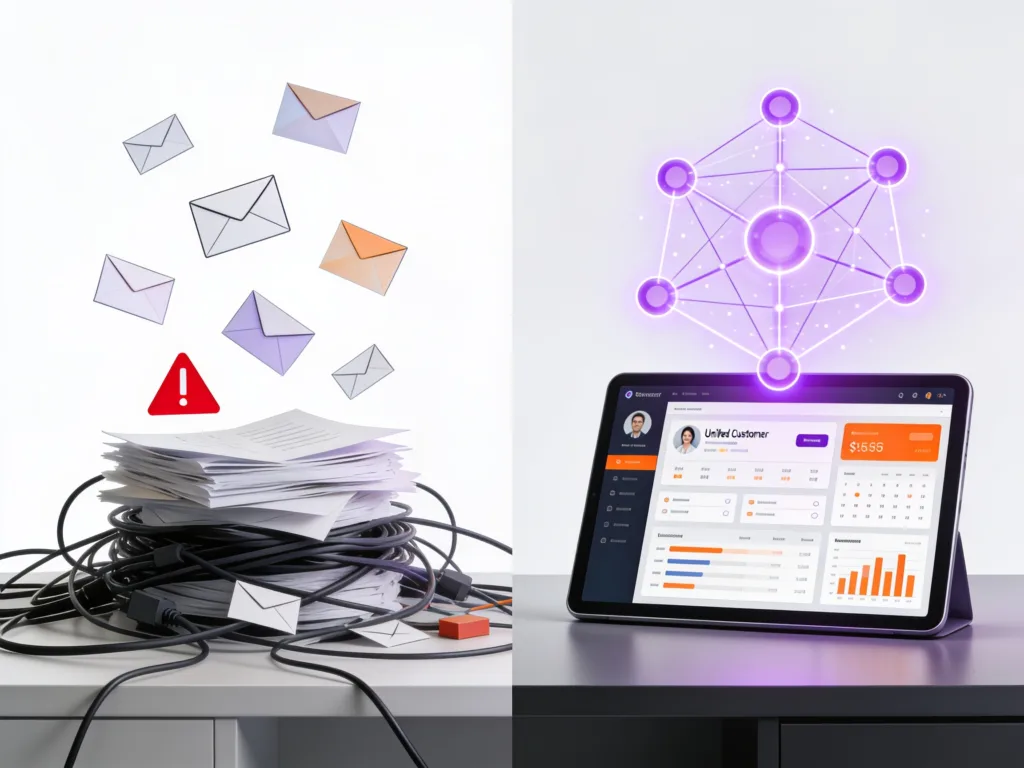
When marketing automation tools are disconnected from loyalty platforms, e-commerce stores, or POS systems, errors inevitably occur. A customer might, for example, receive a promotional email for an item they purchased an hour earlier in a physical store.
3. Removing the Personal Tone from Copywriting
An automated message must never sound robotic. Using conversational language, defining a clear purpose for the message, and adapting copy to the customer’s level of familiarity creates an authentic human connection.
How to Assess Your Customer Communication Maturity
To reflect briefly on where your organization stands on its automation journey, consider the following questions:
- Can you split your database with a single click to separate customers who have bought more than three times from single purchase buyers?
- Is communication with a new newsletter subscriber triggered automatically within minutes of signing up?
- Does your system automatically tailor message content based on which web pages or product categories the user viewed most recently?
- Do you track the entire customer journey across multiple touchpoints, or do you only monitor email open rates?
If you answered no to most of these questions, there is significant room to boost the efficiency of your communication processes.
Technology Serving Better Relationships
At its core, marketing automation is not a shortcut for bulk messaging, but a tool for gaining a deeper understanding of your customer. By configuring workflows correctly and integrating data sources, businesses ensure every user receives precisely the information they need at the exact moment they need it.
