


From Visitor Data to Better Experiences: Connecting Loyalty and Marketing Automation
The information is there. What happens next?
Most destinations and customer-facing businesses already collect more information than they realise.
A visitor registers for an event. A guest books a wellness experience. A customer purchases a gift card or uses a loyalty benefit. Someone subscribes to a newsletter, clicks on an offer or returns to a destination after several months.
Each interaction tells us something about that person’s relationship with a business or destination.
The challenge is that these interactions often remain separate. One system manages registrations, another processes transactions, a loyalty platform records member activity, and a marketing tool handles communication. Each serves a purpose, but the wider customer journey can be difficult to understand.
This creates an important question: how can businesses turn individual interactions into a more connected, relevant and valuable experience?
The answer is not necessarily another platform or another campaign. It starts with understanding the relationship between visitor data, loyalty programmes and marketing automation.
1. Look beyond individual transactions
A transaction tells you what happened at a particular moment. On its own, it rarely explains the full customer journey.
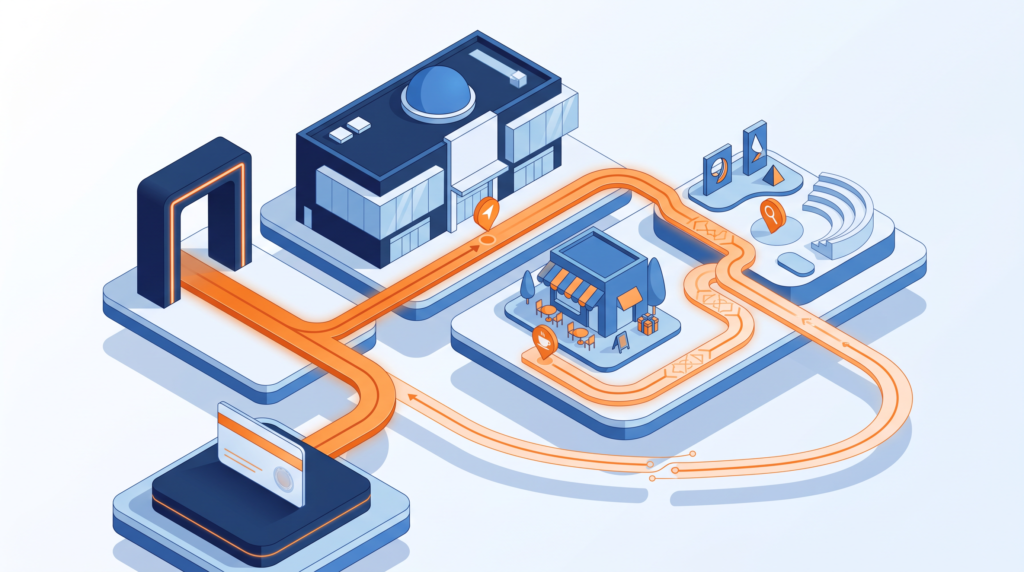
Consider a visitor who receives a €50 gift card for a shopping centre. They redeem it, explore a store they have never visited before and discover a restaurant nearby. Perhaps they join the centre’s loyalty programme. A few weeks later, they return because they receive information about an event that genuinely interests them.
From a purely transactional perspective, the gift card was purchased and redeemed. From a customer-experience perspective, however, it may have introduced a new visitor to the destination, encouraged additional spending and created an opportunity for a lasting relationship.
The same principle applies to tourism and wellness. A guest may book a stay, attend an event or use a particular service without the business understanding what would encourage them to return.
The important distinction is between recording an interaction and understanding what it means.
Businesses that want to improve customer engagement should therefore ask more than how many transactions they processed. They should also consider which interactions lead to further engagement, which experiences encourage repeat visits and where customers disengage.
This does not mean tracking every possible behaviour. It means identifying the information that helps answer meaningful business questions.
2. Loyalty programmes should support relationships, not just rewards
Loyalty programmes are often evaluated through the benefits they offer: points, cashback, discounts, vouchers or exclusive promotions.
These mechanisms can be valuable, but the reward itself is only one part of the experience.
A useful loyalty programme should have a clear purpose. Does the business want to encourage more frequent visits, introduce customers to additional services, reward long-term engagement or strengthen relationships with existing members?
The answer influences how the programme should work.
For example, a shopping centre might want to encourage customers to explore more of its stores. A wellness destination might focus on repeat bookings outside its busiest periods. A tourism destination might want visitors to discover local attractions and participating businesses beyond the most popular locations.
Each objective requires a different approach to engagement and measurement.
The value of a loyalty programme also increases when the business can understand how members interact with it. Are customers actively using their benefits? Which offers attract attention? Do members return after redeeming a reward? Are new members becoming regular visitors?
These questions help move loyalty beyond the distribution of incentives. They make it possible to evaluate whether the programme is supporting the behaviour the business actually wants to encourage.
3. Marketing automation connects insights with action
Understanding customer behaviour is useful only if that understanding can inform decisions.
This is where marketing automation becomes important.
Rather than sending the same message to every contact, businesses can create communication journeys based on relevant interactions, preferences and customer permissions.
Imagine a visitor who attends an event at a shopping centre. With an appropriate, consent-based follow-up process, the centre could share information about similar upcoming events or relevant experiences.
A loyalty member who has not used their benefits for some time might receive a reminder about an offer that matches their interests. A guest who has previously booked a particular type of wellness experience might be informed about a relevant new service.
The purpose is not to automate communication simply because automation is available. It is to make communication more timely, relevant and useful.
A well-designed automated journey begins with a few basic questions:
- What action or event should trigger the communication?
- Who should receive the message?
- What information makes the message relevant?
- What should the recipient be able to do next?
- How will the business evaluate the outcome?
The answers help ensure that automation supports a defined customer-experience objective rather than generating more messages without a clear purpose.
Of course, personalisation must respect customer preferences, appropriate permissions and applicable data protection requirements. Better use of data depends on trust as much as it depends on technology.
4. Smart destinations need a connected ecosystem
The relationship between data, loyalty and automation becomes particularly interesting when we look at destinations.
A destination is rarely a single service provider. It may include accommodation, restaurants, cultural attractions, leisure facilities, events, transport and local businesses. Visitors experience these services as parts of their overall journey, even when different organisations operate them.
This creates a coordination challenge.
A destination may promote local attractions without knowing whether visitors discover them. Participating businesses may offer benefits without having a clear view of how those benefits contribute to the wider visitor experience. Marketing teams may communicate regularly without understanding which interactions encourage people to return.
A smart destination approach aims to make these experiences more connected.
Digital visitor services can make it easier to access information and benefits. Loyalty mechanisms can encourage exploration and repeat engagement. Marketing automation can support relevant communication before, during and after a visit. Appropriate reporting can help destination managers understand participation and identify opportunities for improvement.
The objective is not to make every service identical or to centralise every decision. It is to create enough coordination for visitors, partners and destination managers to benefit from a more coherent experience.
This requires collaboration as well as technology. Participating organisations need to understand their roles, agree on meaningful objectives and determine which information can be shared appropriately.
Without that foundation, even a sophisticated digital system can become another isolated tool.
5. Measure what happens after the first interaction
One of the most useful changes a business can make is to extend its measurement beyond the initial transaction.
Sales, registrations, redemptions and campaign clicks can all provide valuable information. However, they describe different stages of a journey and should not automatically be treated as evidence of long-term engagement.
A business might begin by measuring a simple sequence:
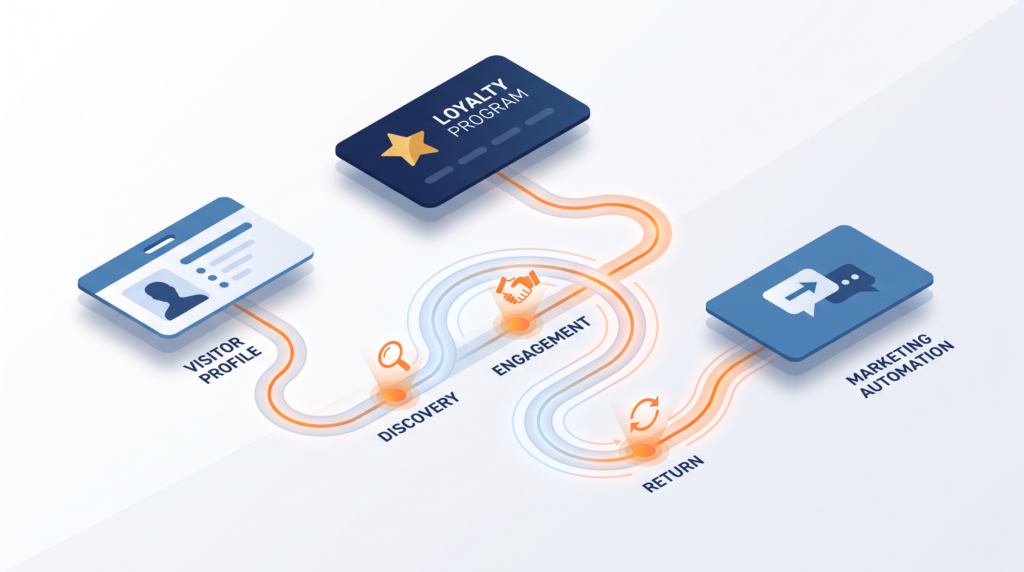
First interaction → Loyalty engagement → Repeat visit → Continued engagement
For each stage, it can identify an appropriate metric.
For example, a shopping centre might measure how many eligible first-time visitors join its loyalty programme, how many members return within a defined period and how many engage with a subsequent campaign.
A wellness destination might examine repeat bookings, participation in relevant offers or engagement across different services.
A tourism destination might focus on participation by local partners, use of visitor benefits or engagement with experiences beyond the initial point of interest.
The exact measures should reflect the business model and the available data. Not every organisation needs an extensive analytics framework from the beginning.
It is often more useful to start with one clearly defined question, establish a baseline and monitor whether a particular change makes a difference.
This also helps marketing and management teams move beyond reporting activity towards understanding outcomes.
6. Start with the journey, then choose the technology
Connecting visitor data, loyalty and marketing automation does not have to begin with a major transformation project.
A practical starting point is to map one customer journey and identify where information becomes disconnected.
Choose a real situation: a first visit, a gift card redemption, an event registration or the end of a guest’s stay.
Then consider what the business knows at that point, what it would ideally like to understand and what action would genuinely improve the next interaction.
From there, review the systems already in place. Can they exchange the necessary information? Are the relevant customer permissions recorded? Can the team create an appropriate follow-up? Is there a clear way to measure the result?
This approach helps distinguish between a genuine capability gap and a process that simply needs better coordination.
It also makes it easier to prioritise investment. Rather than introducing technology because it offers an impressive list of features, businesses can select solutions according to the problems they need to solve.
At Smart Octopus Solutions, our work spans gift card management, loyalty programmes, smart destination solutions and marketing automation. These capabilities address different needs, but their wider value lies in how they can support a more connected customer journey.
The right combination depends on the organisation, its objectives and the experience it wants to create.
Conclusion: Better experiences begin with better connections
Visitor data, loyalty programmes and marketing automation are often discussed as separate topics. In practice, they are closely related.
Data helps businesses understand interactions. Loyalty programmes provide reasons for customers and visitors to engage again. Marketing automation helps translate relevant insights into timely communication.
When these elements work together, businesses can move beyond isolated transactions and begin building more coherent customer experiences.
The first step does not have to be complicated. Start with a question that matters to your organisation: what makes visitors return, which interactions create lasting value, or where does the customer journey break down?
Then connect the information, processes and tools that can help answer it.
Because the goal is not simply to collect more data or send more campaigns. It is to make every relevant interaction contribute to a better experience.
How connected is your customer journey today?
